Modeling Solar ROI With AI, Until the Incentive Structure Disappeared
Problem
Figuring out whether solar actually makes financial sense is genuinely hard for most homeowners. It depends on state specific regulations, utility rates, subsidies, and the physical details of the house, information that's scattered and inconsistent, usually pieced together with help from a salesperson who has every incentive to say yes.
Constraint
This was self-funded, just the two of us. There was no budget to build something broad on a hunch, so we had to scope tightly around one real question, could accurate, personalized ROI modeling actually be delivered automatically, before either of us invested any further.
Approach
My co-founder, our CTO, built the RAG system itself, trained on state level data on regulations, subsidies, and incentive programs, so someone could enter their zip code and electricity bill and get back a real ROI estimate. I built the app's interface, designed and ran the hypothesis testing that shaped what we actually needed to prove, and wrote the user guides that let early testers use it. I also ran over 30 discovery interviews with homeowners, installers, and utility experts, to check whether this was even the right problem to solve before we went further.
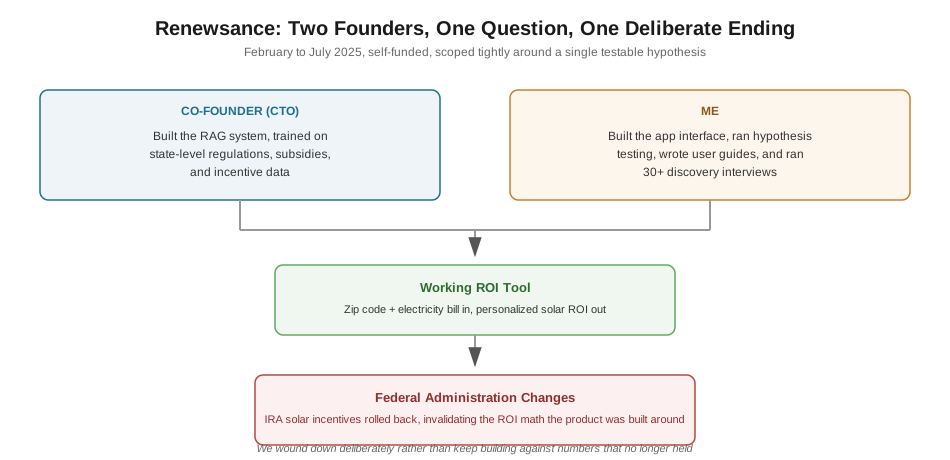
The tool worked exactly as designed, and the business still died, because the constraint had quietly moved from the product to federal policy, and no amount of good engineering could follow it there.
Outcome
The system worked exactly as designed, producing real, personalized ROI estimates from actual state level data. Before we could scale past that validation stage, the federal administration changed, and the Inflation Reduction Act's solar incentives got rolled back and limited, changing the ROI math the entire product depended on. We made the call to wind the venture down while the numbers still reflected reality.